Introduction to Solar Energy
Solar energy is more than a renewable resource—it’s the backbone of sustainable energy development, ensuring a sustainable future . By harnessing power from the sun, businesses and homeowners can cut energy costs while accelerating the shift to a greener economy.
In Malaysia, government incentives such as net energy metering make adoption even more compelling, rewarding early movers with long-term savings and energy independence.
And yet, solar providers face a critical challenge: awareness. A strong digital presence and solar website design strategy, along with thorough analysis, determines whether your business wins tenders, captures leads, and positions itself as a leader in this growing market.
Benefits of Solar Energy
Solar energy is a clean, sustainable power source that directly reduces reliance on fossil fuels. By installing solar panels, businesses and homeowners can unlock decades of performance—panels often last 25 years or more with minimal maintenance, ensuring consistent energy efficiency.
Costs have fallen dramatically, making solar more accessible than ever. The payoff goes beyond lower monthly bills: solar delivers a strong return on investment, offering long-term savings while reducing exposure to rising energy prices.
💡 If you could lock in predictable energy costs for the next two decades, why wait for the grid to decide your future?
The shift is about more than economics. By investing in solar, organisations achieve energy independence, strengthen resilience, and demonstrate a clear commitment to sustainability—values increasingly demanded by consumers, regulators, and partners, helping them become a market leader .
A well-built solar website amplifies these benefits by optimizing for user behavior . Through clear messaging, data-backed ROI calculators, and intuitive design, providers can convert awareness into adoption, guiding customers from curiosity to commitment.
Large Scale Solar Projects
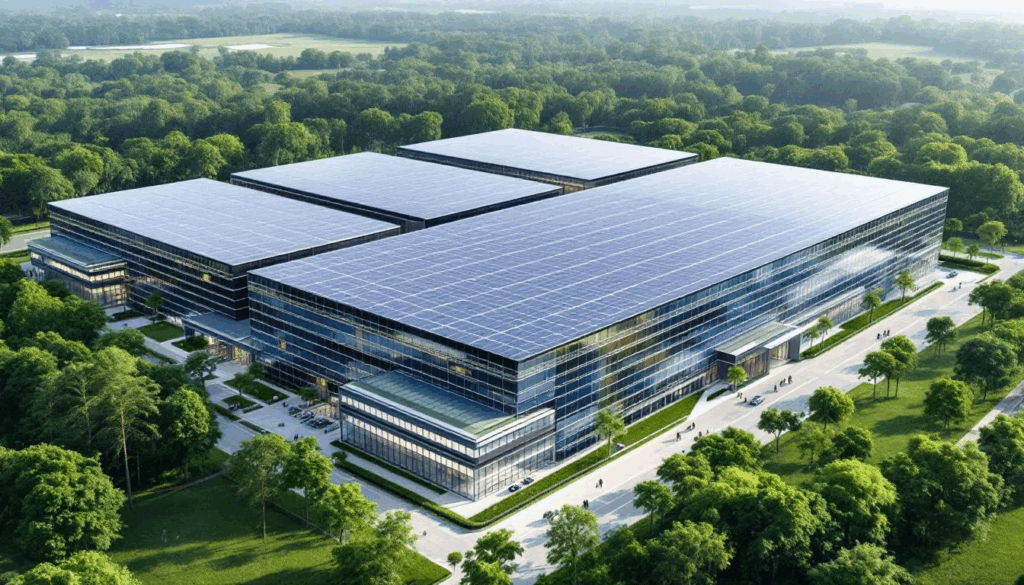
Large scale solar projects are accelerating as corporations and governments double down on renewable energy investments. These initiatives not only expand the solar industry but also cut carbon emissions at scale, strengthening national sustainability goals.
Such projects drive more than clean energy—they generate substantial revenue for companies and ripple growth across the broader industry. With the Sustainable Energy Development Authority (SEDA) shaping regulations and supporting adoption, Malaysia’s renewable energy landscape is positioned for rapid expansion.
💡 If entire industries can pivot to solar to secure long-term growth, what’s stopping individual businesses from doing the same?
For solar developers and EPC contractors, a strong digital presence is now essential. A well-designed website can showcase complex projects through interactive maps, drone imagery, and real-time performance dashboards, making large-scale investments both tangible and trustworthy. By integrating data visualisation and intuitive navigation, WDD’s web design services help providers move beyond static brochures—turning websites into persuasive platforms for winning stakeholders, investors, and clients.
Creating a Solar Website
A well-designed website is the digital foundation for any solar business. It should be intuitive, informative, and structured to guide users through complex topics like net energy metering, system costs, and environmental impact. A clear, user-friendly experience ensures that visitors not only understand the benefits of solar but also trust the provider behind it.
Yet many solar companies still rely on generic templates that fail to capture the sophistication of their services; integrating content analytics software could enhance their approach . When prospective clients can’t find answers—or worse, feel overwhelmed—they drop off before conversion.
💡 If your website isn’t simplifying solar for your audience, how many opportunities are slipping away unnoticed?
This is where thoughtful design makes the difference. With WDD’s web design services, solar websites can incorporate ROI calculators, energy savings estimators, and interactive FAQs, turning curiosity into confident action. Paired with Google Analytics and other tracking tools, businesses can gain precise insight into user behaviour and continuously refine both content and design. A well-built site doesn’t just inform—it converts visitors into long-term advocates for clean energy.
Web Analytics and Optimization
Web analytics is the compass that helps solar companies navigate how visitors engage with their site. Understanding where users come from, how long they stay, and which pages spark the most interaction is essential for turning interest into adoption.
The critical data points every solar website should track include:
Traffic Sources – Are visitors finding you through search, social, or referrals?
Engagement Metrics – Page views, bounce rates, and time spent on content like ROI calculators or case studies.
Conversion Rates – How many visitors request a quote, book a consultation, or download a brochure.
Geographic Insights – Location data that reveals where solar adoption is growing fastest.
Device Usage – Mobile vs. desktop behaviour to ensure seamless performance across devices.
New vs. Returning Users – To gauge campaign effectiveness and loyalty.
💡 If your analytics reveal strong traffic but weak conversions, what story is your website telling—or failing to tell?
By leveraging tools like Google Analytics alongside A/B testing, solar businesses can refine calls-to-action, optimise landing pages, and align content with user intent. With WDD’s expertise, these insights become actionable improvements—transforming underperforming pages into conversion engines that reflect both solar’s financial value and environmental promise.
Content Strategy for Solar Websites
A strong content strategy is the backbone of a successful solar website. It shapes how potential customers perceive your expertise, and it builds the trust needed to move from curiosity to adoption.
High-quality, informative content not only educates but positions your company as a thought leader in renewable energy and sustainable technology . Blog posts, case studies, and explainer articles can break down complex topics such as net energy metering, long-term ROI, or large-scale solar projects into digestible, actionable insights.
To maximise visibility, content should be aligned with SEO fundamentals—from keyword research to on-page optimisation—ensuring your site ranks when users search for solar solutions. Analytics can further refine strategy, highlighting which topics generate the most engagement and which formats drive the most conversions.
The real differentiator lies in tone and relevance. Does your content answer the questions users are really asking—or simply what you want to say? That gap often decides whether a visitor bounces or takes the next step.
By combining educational depth with user-focused clarity, a solar website becomes more than an online brochure—it evolves into a trusted resource guiding decision-makers toward sustainable energy choices.
Industry Trends and Market Research
The solar industry is evolving at a remarkable pace. Breakthroughs in panel efficiency, energy storage, and financing models are reshaping how businesses and households approach renewable adoption. What once felt like a niche investment is rapidly becoming a mainstream energy strategy.
Market research plays a critical role in keeping companies ahead of the curve. By analysing adoption rates, technology costs, and regulatory incentives, businesses can identify where demand is growing fastest and where to focus resources. Free industry reports and competitive benchmarks provide additional context, helping refine both product offerings and marketing approaches.
Trends are not uniform across sectors. The rise of large-scale solar projects signals strong momentum in corporate and government investment, while residential demand continues to be fuelled by falling costs and attractive financing options. Commercial buildings sit somewhere in between, balancing long-term ROI with sustainability commitments demanded by stakeholders.
The question is no longer if solar will dominate—but who will be best positioned when it does. Are you aligning your business strategy with where the market is heading, or are you waiting for the shift to pass you by?
Driving Clean Energy Growth
The expansion of solar is more than a market trend—it is central to reducing carbon emissions and advancing global sustainability goals. Governments are pushing harder with incentives like tax credits and net energy metering, while businesses increasingly embed renewable energy into their ESG commitments to manage energy bills .
But here’s the sharper question: if incentives and technology are in place, what truly holds organisations back from fully embracing solar? This pause makes the economic and cultural barriers clearer—and often reveals opportunities for education, collaboration, and innovation.
When policymakers, corporations, and consumers align, the momentum accelerates—resulting in wider adoption and reduced reliance on fossil fuels. Education also plays a role: awareness campaigns that make solar benefits tangible, such as installation advantages, can nudge hesitant decision-makers toward action.
Conclusion
Building a solar website today isn’t just about digital presence—it’s about shaping the narrative of clean energy. A strong site informs, reassures, and converts, turning interest into measurable adoption.
Yet the real question is this: if solar holds the keys to savings, resilience, and sustainability, why should your digital presence lag behind? That gap often determines whether potential adopters take the leap—or look elsewhere.
This is where WDD comes in. By crafting websites that combine valuable information, industry insights, and seamless user experience, WDD helps solar providers communicate with clarity and credibility. With integrated analytics, tailored content strategies, and data-driven design, we ensure solar companies don’t just keep up with industry growth—they lead it.
As the global shift toward sustainability accelerates, those who invest in a website built for trust, performance, and conversion will stand at the forefront of renewable energy adoption.