
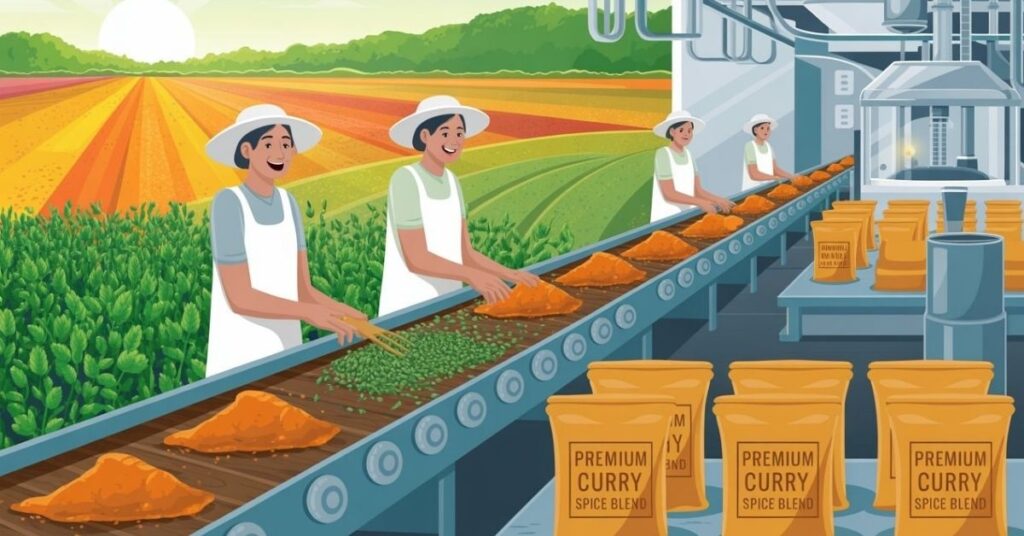
Global Pressures Reshape Malaysia’s Agrifood Industry
The agriculture and food sector faces unprecedented challenges that directly affect the entire value chain of food products . Global supply chains span multiple countries and are increasingly vulnerable to disruptions caused by geopolitical events, rising input costs, climate change, and shifting trade dynamics. For business development and marketing leaders in Malaysia’s agrifood companies, plantation operators, and food manufacturers, these challenges necessitate strategic shifts to ensure continuity, competitiveness, and cost control.
To adapt, large agrifood companies are looking inward—toward agile, locally grounded partners who can reduce import dependency, shorten supply chains, and offer exceptional ingredients with consistent quality. Small and medium-sized enterprises (SMEs) specialising in agriculture technology, local ingredient supply, and farm services play a critical role. These local suppliers bring flexibility, technical innovation, and a deep understanding of regional conditions, enabling major agrifood players to mitigate supply risks and maintain profitability.
Supplying Local Ingredients and Reducing Import Dependency
Small producers of spices, grains, dairy, and alternative proteins serve as the foundation of Malaysia’s food supply, catering to specific needs . By partnering with certified local SMEs, food manufacturers can reduce reliance on imported raw materials, shielding themselves from global price volatility and transportation disruptions. This strategy also enhances traceability and sustainability—two key messaging pillars for marketing and branding teams responding to evolving consumer demands.
Sourcing locally minimises exposure to foreign exchange fluctuations and freight surcharges, while promoting Malaysia’s agricultural economy. For business development professionals, aligning with local suppliers unlocks faster response times, streamlined communication, and opportunities for co-branding that enhance product quality . The value of these partnerships lies not only in operational advantages but also in their contribution to consumer-facing narratives around local sourcing and quality assurance.
Precision Farming and Agritech Solutions
SMEs specialising in precision farming tools, fertigation systems, and controlled-environment agriculture offer modular technologies that help large plantations and growers optimise output for long term success . Through data-driven insights, these local agritech firms support better resource management, reduce input waste, and improve resilience to climate disruptions—all while keeping profitability in view.
For business development and marketing teams, these solutions can now be featured as part of corporate sustainability storytelling, particularly when introducing new products . Verified traceability and environmentally responsible practices boost brand appeal and provide compelling content for digital channels, investor reports, and ESG disclosures. These modular systems also allow phased adoption, reducing CAPEX burdens and enabling strategic long-term innovation.
Contract Growing and Vertical Integration Support
SMEs involved in contract growing offer larger food companies flexible, on-demand production capabilities. By engaging specialist small-scale farmers, major players can scale up operations without investing in additional land or manpower. For procurement and operations teams, this enables leaner inventory strategies, while for marketing, it opens the door to feature farm-to-factory stories that consumers increasingly value.
Beyond farming, SMEs offering vertical integration—from post-harvest handling to packaging—help reduce losses and improve consistency. With the right digital infrastructure, these solutions can be highlighted online as part of a brand’s operational excellence and value chain transparency. In turn, this creates storytelling assets for marketing departments and instills confidence among prospective B2B partners.
Sustainable Packaging and Processing Add-ons Featuring Innovative Ingredients
Sustainability is no longer optional; it is expected, even at a competitive price . Small packaging and processing firms are stepping up with biodegradable materials, smart labelling, and energy-efficient modules that help major food companies meet ESG targets. Their responsiveness and adaptability give them an edge in navigating new policies and market shifts.
For marketers, these collaborations offer tangible claims for greener packaging and cleaner production. Stories of low-waste, locally sourced, and environmentally smart packaging can be featured in campaigns, social media, and CSR narratives. For business developers, these SMEs become turnkey collaborators for innovation rollouts and pilot programs that large organisations need to execute quickly.
Ensuring Food Safety, Quality Control, and Navigating Regulations
Food safety and compliance are foundational to market credibility. Local SMEs that supply ingredients or processing solutions uphold strict quality protocols to ensure every product meets industry standards. Many are equipped with international certifications and updated with the latest market trends and regulations.
These certifications and practices are also powerful sales tools. Marketing teams can showcase these credentials across websites, product brochures, and export documentation to various countries . Business developers gain from smoother cross-border opportunities and reduced risk perception. Additionally, SMEs often engage in collaborative R&D and customisation, helping food manufacturers differentiate through taste, functionality, or nutritional value.
Their ability to deliver tailored, certified solutions with speed and consistency makes them indispensable to brands looking to enter new markets or expand product lines. With rising consumer scrutiny and evolving regulatory landscapes, partnerships with trusted local SMEs give food businesses a solid competitive edge, a source of pride .
A High-Performing Website: The Bridge to Growth, Outstanding Quality, and National Recognition
For small agrifood businesses aspiring to connect with Malaysia’s leading food manufacturers and retailers, a professionally built website is no longer optional—it is the entry point to visibility and the promotion of their products . More than just an online brochure, a strategic website converts operational credibility into market opportunity.
By clearly presenting service offerings, certifications, case studies, and facility visuals, the website becomes a trust engine—especially for B2B buyers who require consistency and transparency in the concept of service . Yet this is only the starting point.
To truly attract and convert leads, the website must include:
Customised enquiry forms for B2B outreach
Downloadable product brochures and technical specs
Analytics tools to monitor traffic and customer behaviour
Let’s take a look at two Malaysian agrifood players who embraced this approach, with websites proudly developed by WDD Malaysia:
SPI Manufacturing
Specialty: Spice bases, coconut-based sauces and OEM solutions that make a difference.
Established in 2002, SPI Manufacturing creates premium-quality spice bases and coconut-based products—free from MSG, artificial fillers, and preservatives. Their certified facility and expert food technologists have long upheld quality, but it was their website that accelerated business growth.
By showcasing customisable offerings, halal certifications, and OEM solutions online, SPI now engages clients across Malaysia, including major retailers and manufacturers. Their website has evolved into a business development engine and export readiness platform.
Buy Spices: shop.spimfg.com.my
Roshan Cooking Oil
Specialty: Subsidised and non-subsidised bottled cooking oils
Roshan Jaan Sdn Bhd began in Pahang, known primarily within suburban communities. As demand grew, Roshan expanded into bottled cooking oils for mass-market distribution. To support this expansion, their branded website now displays production capabilities, packaging formats, and certifications.
Today, Roshan is a recognised name in Klang Valley supermarkets and beyond. Their site functions not only as a corporate portfolio but also as a sales platform—eliminating the need for physical agents across regions.
Visit Website: www.roshancookingoil.com
The Bottom Line? Your Website Can Be a Business Development Power Tool
In today’s agrifood landscape, if you’re not discoverable online, you’re invisible to potential buyers. A professionally built, SEO-driven website is no longer a luxury—it is your round-the-clock sales engine, trust builder, and scaling enabler.
Whether you’re a contract grower, precision farming innovator, or ingredient supplier, your website should work as hard as you do—turning enquiries into partnerships and positioning your business for procurement success.
Want to position your brand for national recognition and faster B2B growth?
Book a complimentary Digital Readiness Audit to identify gaps
View agrifood case studies such as SPI and Roshan
Receive a tailored website strategy proposal within three working days
Let’s build your digital advantage and explore the possibilities .
Digital Marketing as the Driver of Visibility and Market Trends
Leveraging Social Media Channels
Social media platforms offer agrifood SMEs a direct path to procurement leaders, sustainability officers, and decision-makers across the supply chain. Platforms like LinkedIn allow businesses to share innovation stories, case studies, and ESG progress—keeping them top-of-mind for potential clients.
Beyond visibility, consistent and professional social media presence supports brand credibility, investor relations, and customer trust. Targeted digital campaigns and remarketing strategies can extend this reach across regions, boosting enquiries and reducing reliance on traditional sales reps.
Strategic Content and Digital Marketing
Publishing whitepapers, technical guides, and trend articles positions agrifood SMEs as thought leaders. These assets support both inbound marketing and outbound sales efforts, giving business development teams high-value tools to engage and educate prospects.
Through SEO-driven campaigns and content syndication, these materials not only drive traffic but also validate expertise. For marketers, it is an opportunity to influence industry discourse while reinforcing the company’s brand identity.
Boosting Visibility with Search Engine Optimization (SEO)
In a competitive digital landscape, SEO is the backbone of online discoverability. By targeting high-intent keywords like “local ingredient supplier Malaysia”, “precision farming solutions Malaysia,” and “eco packaging Malaysia,” businesses can attract quality leads actively seeking partnerships.
Complementing SEO with blog content, business directories, and strategic backlinks improves site authority and ranking. Collaborating with agricultural platforms or trade groups for digital PR can further amplify reach.
For deeper impact, SMEs should integrate long-tail keywords that align with buyer search behaviour:
“Local organic ingredient suppliers Malaysia” – For buyers seeking traceable, certified products
“Sustainable packaging solutions for food industry Malaysia” – For ESG-aligned partnerships
“Precision agriculture technology providers Malaysia” – For innovation-focused buyers
“Contract farming services Malaysia” – For scalable production sourcing
“Food safety certification consultants Malaysia” – For compliance-conscious manufacturers
By weaving these phrases into their digital footprint, agrifood SMEs become highly visible to procurement teams, brand managers, and supply chain planners.
Secure Malaysia’s Food Future by Building Strategic Partnerships Today
Malaysia’s food security and agrifood competitiveness depend on smart, local partnerships. Contract growers, local ingredient suppliers, and agritech innovators are key enablers of resilience and growth.
For business development and marketing professionals, connecting with these SMEs and amplifying their value through strategic digital channels is no longer optional. It is a strategic imperative.
The future of Malaysia’s food system depends on decisive action. Build digital visibility, forge powerful collaborations, and lead the charge toward a stronger, more sustainable supply chain.
Start your transformation today—let’s talk.