A Selangor SME pays under RM1,000 a month and never thinks about backups again. Another skips maintenance, gets hacked, and pays five figures to recover.
This is the plain-English reference for website maintenance plans in Malaysia: what a plan is, exactly what belongs in one, what the market charges, and how to judge any quote you are handed. When you are ready to price your own site, our website maintenance services Malaysia page carries the current tiers and a scoped quotation.
Website maintenance plans in Malaysia cost RM450 to RM3,200 per month, depending on your site's size and the support hours included. Every credible plan covers five core items: software updates, daily off-site backups, uptime monitoring, security scans, and a monthly report.
Everything after this is detail: what those inclusions mean, why the price moves, and how to tell a real plan from a cheaper product wearing the same name. Read it, then benchmark any proposal, ours included, against it.
After years of patching, backing up and rescuing Malaysian business websites, our position is blunt: a maintenance plan is not a product you buy, it is proof that the boring work is actually happening. Most owners do not need the biggest tier. They need daily off-site backups, a real support-hours number, and a monthly report they will actually receive. If a provider cannot show you those three things, the price is irrelevant.
The trap is not overpaying. It is paying a small monthly fee for a plan that quietly does none of the above, then discovering the gap only when the site is down. Buy the coverage, not the label. If a one-time fix is genuinely all your brochure site needs, we will tell you so on the maintenance page rather than push a retainer you will not use.
'%2F%3E%3Cstop%20offset%3D'1'%20stop-color%3D'rgba(212%2C175%2C55%2C0)'%2F%3E%3C%2FradialGradient%3E%3Cpattern%20id%3D'hex'%20width%3D'56'%20height%3D'48'%20patternUnits%3D'userSpaceOnUse'%3E%3Cpath%20d%3D'M14%200l14%208v16l-14%208-14-8V8z%20M42%200l14%208v16l-14%208-14-8V8z%20M28%2024l14%208v16l-14%208-14-8V32z'%20fill%3D'none'%20stroke%3D'rgba(4%2C245%2C255%2C0.14)'%20stroke-width%3D'1.1'%2F%3E%3C%2Fpattern%3E%3C%2Fdefs%3E%3Crect%20width%3D'1200'%20height%3D'628'%20fill%3D'url(%23g)'%2F%3E%3Crect%20width%3D'1200'%20height%3D'628'%20fill%3D'url(%23hex)'%2F%3E%3Crect%20width%3D'1200'%20height%3D'628'%20fill%3D'url(%23gold)'%2F%3E%3Cg%20fill%3D'none'%3E%3Ccircle%20cx%3D'940'%20cy%3D'250'%20r%3D'140'%20fill%3D'rgba(4%2C245%2C255%2C0.07)'%2F%3E%3Ccircle%20cx%3D'940'%20cy%3D'250'%20r%3D'126'%20stroke%3D'rgba(212%2C175%2C55%2C0.55)'%20stroke-width%3D'2.5'%3E%3Canimate%20attributeName%3D'opacity'%20values%3D'0.4%3B0.85%3B0.4'%20dur%3D'4s'%20repeatCount%3D'indefinite'%2F%3E%3C%2Fcircle%3E%3Ccircle%20cx%3D'940'%20cy%3D'250'%20r%3D'150'%20stroke%3D'rgba(4%2C245%2C255%2C0.3)'%20stroke-width%3D'1.5'%3E%3Canimate%20attributeName%3D'r'%20values%3D'150%3B160%3B150'%20dur%3D'4s'%20repeatCount%3D'indefinite'%2F%3E%3C%2Fcircle%3E%3Cg%3E%3CanimateTransform%20attributeName%3D'transform'%20type%3D'translate'%20values%3D'0%200%3B0%20-8%3B0%200'%20dur%3D'4s'%20repeatCount%3D'indefinite'%2F%3E%3Cpath%20d%3D'M940%20172l62%2022v58c0%2038-26%2070-62%2082-36-12-62-44-62-82v-58z'%20stroke%3D'%2304f5ff'%20stroke-width%3D'5'%20fill%3D'rgba(4%2C245%2C255%2C0.1)'%2F%3E%3Cpath%20d%3D'M916%20250l17%2017%2032-36'%20stroke%3D'%23d4af37'%20stroke-width%3D'6'%20stroke-linecap%3D'round'%20stroke-linejoin%3D'round'%2F%3E%3C%2Fg%3E%3C%2Fg%3E%3Crect%20x%3D'90'%20y%3D'300'%20width%3D'76'%20height%3D'7'%20rx%3D'3.5'%20fill%3D'%23d4af37'%2F%3E%3Ctext%20x%3D'88'%20y%3D'372'%20font-family%3D'Arial'%20font-size%3D'54'%20fill%3D'%23ffffff'%20font-weight%3D'700'%3EWebsite%20Maintenance%20Plans%3C%2Ftext%3E%3Ctext%20x%3D'90'%20y%3D'420'%20font-family%3D'Arial'%20font-size%3D'24'%20fill%3D'rgba(255%2C255%2C255%2C0.8)'%3EWhat%20is%20included%20and%20how%20much%20to%20pay%3C%2Ftext%3E%3C%2Fsvg%3E)
What is a website maintenance plan?
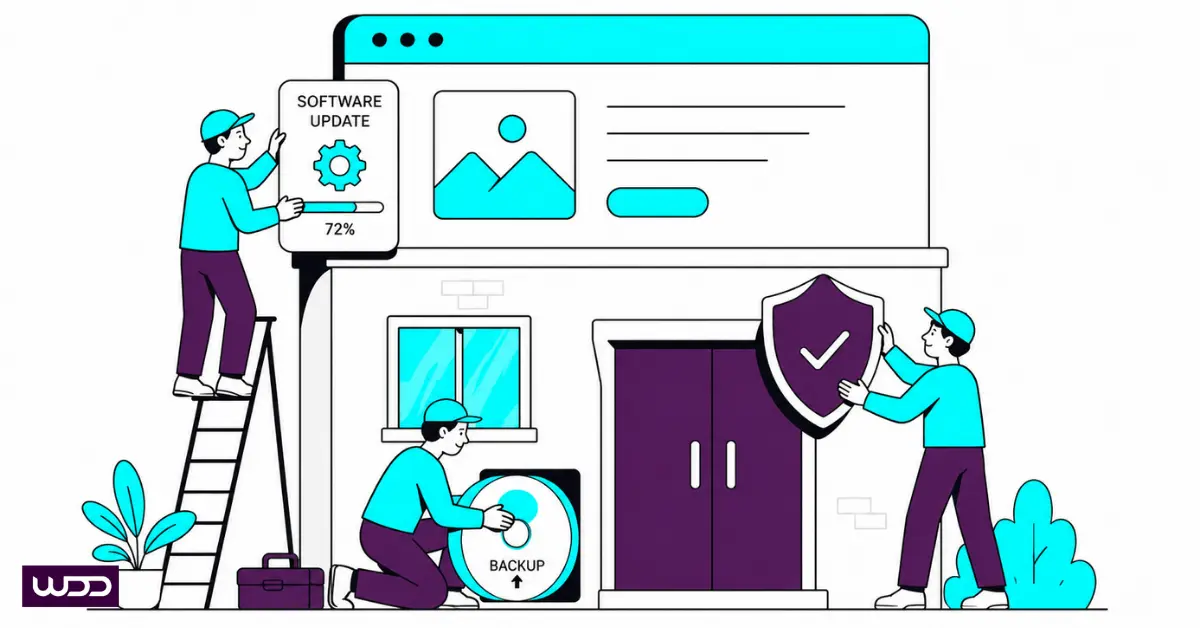
A website maintenance plan is a recurring agreement with an agency or developer to keep your website healthy, so the work happens continuously in the background instead of only when something breaks. You pay a fixed monthly fee and receive a set number of support hours to spend across the year on updates, fixes and small improvements.
Think of it like servicing a car. You do not wait for the engine to seize; you change the oil on schedule so it never does. A website is the same. Plugins, themes and the platform itself update constantly, backups can silently stop running, and small errors accumulate until one of them takes the site down. A plan keeps all of that in hand.
Skipping this upkeep is where trouble starts, and the search-visibility cost is the part most owners never see coming. We cover the early warning signs, and what neglecting website maintenance actually costs you, in our cornerstone guide. This page picks up where that leaves off: the plans themselves, and what they should cost.
'%2F%3E%3Cstop%20offset%3D'1'%20stop-color%3D'rgba(212%2C175%2C55%2C0)'%2F%3E%3C%2FradialGradient%3E%3Cpattern%20id%3D'hex'%20width%3D'56'%20height%3D'48'%20patternUnits%3D'userSpaceOnUse'%3E%3Cpath%20d%3D'M14%200l14%208v16l-14%208-14-8V8z%20M42%200l14%208v16l-14%208-14-8V8z%20M28%2024l14%208v16l-14%208-14-8V32z'%20fill%3D'none'%20stroke%3D'rgba(4%2C245%2C255%2C0.14)'%20stroke-width%3D'1.1'%2F%3E%3C%2Fpattern%3E%3C%2Fdefs%3E%3Crect%20width%3D'1200'%20height%3D'628'%20fill%3D'url(%23g)'%2F%3E%3Crect%20width%3D'1200'%20height%3D'628'%20fill%3D'url(%23hex)'%2F%3E%3Crect%20width%3D'1200'%20height%3D'628'%20fill%3D'url(%23gold)'%2F%3E%3Cg%20stroke%3D'rgba(4%2C245%2C255%2C0.62)'%20stroke-width%3D'5'%20fill%3D'none'%3E%3Cellipse%20cx%3D'940'%20cy%3D'170'%20rx%3D'86'%20ry%3D'30'%20stroke%3D'%23d4af37'%2F%3E%3Cpath%20d%3D'M854%20170v70c0%2016%2039%2030%2086%2030s86-14%2086-30v-70'%2F%3E%3Cpath%20d%3D'M854%20240v60c0%2016%2039%2030%2086%2030s86-14%2086-30v-60'%20stroke%3D'rgba(255%2C255%2C255%2C0.4)'%2F%3E%3Ctext%20x%3D'916'%20y%3D'182'%20font-family%3D'Arial'%20font-size%3D'40'%20fill%3D'%23d4af37'%20stroke%3D'none'%20font-weight%3D'700'%3ERM%3C%2Ftext%3E%3C%2Fg%3E%3Crect%20x%3D'90'%20y%3D'300'%20width%3D'76'%20height%3D'7'%20rx%3D'3.5'%20fill%3D'%23d4af37'%2F%3E%3Ctext%20x%3D'88'%20y%3D'372'%20font-family%3D'Arial'%20font-size%3D'54'%20fill%3D'%23ffffff'%20font-weight%3D'700'%3EThe%20Rate%20Card%3C%2Ftext%3E%3Ctext%20x%3D'90'%20y%3D'420'%20font-family%3D'Arial'%20font-size%3D'24'%20fill%3D'rgba(255%2C255%2C255%2C0.8)'%3EHours%20and%20price%20at%20each%20plan%20tier%3C%2Ftext%3E%3C%2Fsvg%3E)
What is included at each website maintenance plan tier?
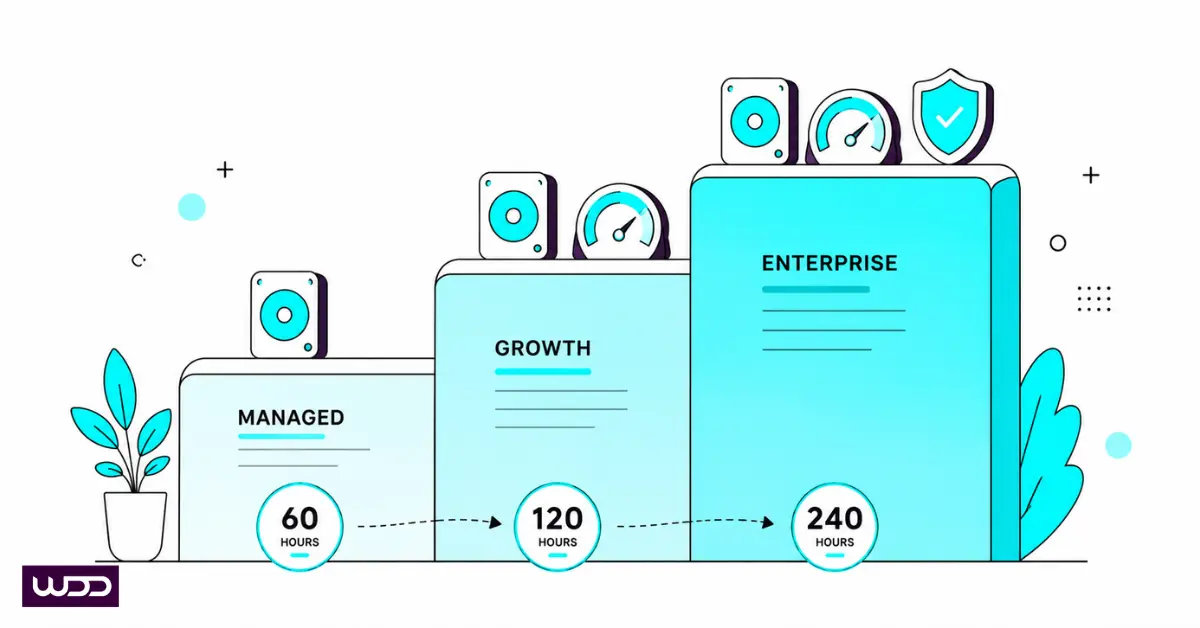
Website maintenance plans are usually additive, so each tier includes everything in the tier below plus more support hours and faster response. Here is our own rate card, in plain figures, so you have a real reference point rather than a vague range. Support hours are counted per year.
SME entry tierCore coverage for a small brochure or lead-generation site: updates, daily backups, monitoring, scans and a monthly report.
Stability for growing businessesMore hours for regular content changes and small improvements, with quicker triage.
Performance and lead-gen sitesAdds Core Web Vitals work and technical SEO upkeep on top of full core coverage.
eCommerce and corporateAdds staging governance, compliance support and a priority response commitment for revenue-critical sites.
Those figures span the full RM450 to RM3,200 per month range. Tap any inclusion in the next section to see exactly what the coverage means, and see the current live tiers or request a scoped price on our website support services page.
'%2F%3E%3Cstop%20offset%3D'1'%20stop-color%3D'rgba(212%2C175%2C55%2C0)'%2F%3E%3C%2FradialGradient%3E%3Cpattern%20id%3D'hex'%20width%3D'56'%20height%3D'48'%20patternUnits%3D'userSpaceOnUse'%3E%3Cpath%20d%3D'M14%200l14%208v16l-14%208-14-8V8z%20M42%200l14%208v16l-14%208-14-8V8z%20M28%2024l14%208v16l-14%208-14-8V32z'%20fill%3D'none'%20stroke%3D'rgba(4%2C245%2C255%2C0.14)'%20stroke-width%3D'1.1'%2F%3E%3C%2Fpattern%3E%3C%2Fdefs%3E%3Crect%20width%3D'1200'%20height%3D'628'%20fill%3D'url(%23g)'%2F%3E%3Crect%20width%3D'1200'%20height%3D'628'%20fill%3D'url(%23hex)'%2F%3E%3Crect%20width%3D'1200'%20height%3D'628'%20fill%3D'url(%23gold)'%2F%3E%3Cg%20stroke%3D'rgba(4%2C245%2C255%2C0.62)'%20stroke-width%3D'5'%20fill%3D'rgba(4%2C245%2C255%2C0.06)'%3E%3Crect%20x%3D'820'%20y%3D'320'%20width%3D'70'%20height%3D'80'%20rx%3D'8'%2F%3E%3Crect%20x%3D'905'%20y%3D'270'%20width%3D'70'%20height%3D'130'%20rx%3D'8'%20stroke%3D'rgba(255%2C255%2C255%2C0.4)'%2F%3E%3Crect%20x%3D'990'%20y%3D'210'%20width%3D'70'%20height%3D'190'%20rx%3D'8'%2F%3E%3Crect%20x%3D'1075'%20y%3D'160'%20width%3D'70'%20height%3D'240'%20rx%3D'8'%20stroke%3D'%23d4af37'%2F%3E%3C%2Fg%3E%3Crect%20x%3D'90'%20y%3D'300'%20width%3D'76'%20height%3D'7'%20rx%3D'3.5'%20fill%3D'%23d4af37'%2F%3E%3Ctext%20x%3D'88'%20y%3D'372'%20font-family%3D'Arial'%20font-size%3D'54'%20fill%3D'%23ffffff'%20font-weight%3D'700'%3EEvery%20Inclusion%3C%2Ftext%3E%3Ctext%20x%3D'90'%20y%3D'420'%20font-family%3D'Arial'%20font-size%3D'24'%20fill%3D'rgba(255%2C255%2C255%2C0.8)'%3EThe%20eight%20things%20a%20proper%20plan%20does%3C%2Ftext%3E%3C%2Fsvg%3E)
The eight things a proper plan actually does
A complete website maintenance plan covers eight specific jobs. If a quote is missing more than two of them, you are buying a cheaper product than you think. Open each one to see what it means, and watch your coverage score climb.
WordPress, its theme and every plugin release updates constantly. Skipping them is the single most common cause of hacked websites. A plan applies updates on a schedule and tests that nothing breaks afterwards.
Backups stored on the same server as your website are not backups. A real plan stores daily copies off-site, so your site can be restored even if the server itself fails, and it tests that the restore actually works.
Automated monitoring pings your website around the clock. If it goes down at 3am, your maintenance team knows before your customers do, rather than finding out from an angry email the next morning.
Regular scans catch malware, suspicious file changes and brute-force attempts. Hardening means closing the doors before anyone tries them: firewall rules, login protection and file-permission lockdowns.
Databases bloat over time with revisions, spam and transients, which slows the site down. Cleaning them keeps it fast, while server-level tuning covers caching, PHP versions and resource limits.
Broken links, missing meta data, crawl errors and accessibility issues quietly erode your Google and AI search visibility. Monthly checks catch them early. For deeper work, this is where a plan hands off to dedicated SEO services Malaysia.
New browser versions and PHP releases break old code. Compatibility testing makes sure your site still looks and works right on every device after every update, not just on the developer's machine.
A report showing what was updated, what was fixed, uptime percentage and security-scan results. If your provider cannot show you this, you have no proof the work is happening, and no way to hold them to it.
What does website maintenance cost across the Malaysian market?
Across the Malaysian market in 2026, website maintenance runs from around RM150 a month for a freelancer to RM3,200 a month for enterprise agency coverage. Here is how the tiers line up by who they suit, so you can place any quote you receive.
| Who it suits | Monthly cost | What you usually get |
|---|---|---|
| DIY / freelancer | RM150 to RM450 | Updates and backups, limited availability, no SLA or report |
| Small business site | RM450 to RM900 | Full core coverage, monthly report, next-business-day triage |
| Growing / lead-gen site | RM900 to RM1,700 | Adds Core Web Vitals work, technical SEO upkeep, faster response |
| eCommerce / enterprise | RM1,700 to RM3,200 | Adds staging governance, compliance support, priority response |
Our own VLite, Managed, Growth and Enterprise tiers sit inside these bands by design, from RM450 up to RM3,200 a month, with support hours and pricing confirmed on a quote and no lock-in penalties. Freelancers can sit lower, but rarely include monitoring, a response-time commitment or reporting, which is the difference you are actually paying for at agency level.
'%2F%3E%3Cstop%20offset%3D'1'%20stop-color%3D'rgba(212%2C175%2C55%2C0)'%2F%3E%3C%2FradialGradient%3E%3Cpattern%20id%3D'hex'%20width%3D'56'%20height%3D'48'%20patternUnits%3D'userSpaceOnUse'%3E%3Cpath%20d%3D'M14%200l14%208v16l-14%208-14-8V8z%20M42%200l14%208v16l-14%208-14-8V8z%20M28%2024l14%208v16l-14%208-14-8V32z'%20fill%3D'none'%20stroke%3D'rgba(4%2C245%2C255%2C0.14)'%20stroke-width%3D'1.1'%2F%3E%3C%2Fpattern%3E%3C%2Fdefs%3E%3Crect%20width%3D'1200'%20height%3D'628'%20fill%3D'url(%23g)'%2F%3E%3Crect%20width%3D'1200'%20height%3D'628'%20fill%3D'url(%23hex)'%2F%3E%3Crect%20width%3D'1200'%20height%3D'628'%20fill%3D'url(%23gold)'%2F%3E%3Cg%20stroke%3D'rgba(4%2C245%2C255%2C0.62)'%20stroke-width%3D'5'%20fill%3D'none'%3E%3Cline%20x1%3D'940'%20y1%3D'150'%20x2%3D'940'%20y2%3D'380'%2F%3E%3Cline%20x1%3D'840'%20y1%3D'190'%20x2%3D'1040'%20y2%3D'190'%2F%3E%3Cpath%20d%3D'M840%20190l-40%2085a52%2034%200%200%200%2080%200z'%20stroke%3D'rgba(255%2C255%2C255%2C0.42)'%2F%3E%3Cpath%20d%3D'M1040%20190l-40%2085a52%2034%200%200%200%2080%200z'%20stroke%3D'rgba(255%2C255%2C255%2C0.42)'%2F%3E%3Cline%20x1%3D'870'%20y1%3D'382'%20x2%3D'1010'%20y2%3D'382'%2F%3E%3Ccircle%20cx%3D'940'%20cy%3D'150'%20r%3D'11'%20stroke%3D'%23d4af37'%2F%3E%3C%2Fg%3E%3Crect%20x%3D'90'%20y%3D'300'%20width%3D'76'%20height%3D'7'%20rx%3D'3.5'%20fill%3D'%23d4af37'%2F%3E%3Ctext%20x%3D'88'%20y%3D'372'%20font-family%3D'Arial'%20font-size%3D'54'%20fill%3D'%23ffffff'%20font-weight%3D'700'%3EWhat%20Moves%20The%20Number%3C%2Ftext%3E%3Ctext%20x%3D'90'%20y%3D'420'%20font-family%3D'Arial'%20font-size%3D'24'%20fill%3D'rgba(255%2C255%2C255%2C0.8)'%3EFour%20factors%20that%20decide%20your%20price%3C%2Ftext%3E%3C%2Fsvg%3E)
What drives the price up or down?
Four factors decide where in the RM450 to RM3,200 range you land. None of them is arbitrary, so a fair quote can point to which ones apply to you.
Site complexity
A ten-page brochure site needs far less care than a WooCommerce store with payment gateways, inventory sync and customer accounts. eCommerce typically pushes you to the Growth or Enterprise tier.
Traffic and uptime stakes
If an hour of downtime costs you real revenue, you need monitoring with a priority response commitment, which sits at the Enterprise level rather than best-effort triage.
Compliance requirements
Sites handling personal data under Malaysia's PDPA, or serving EU visitors under GDPR, need audit trails, staging environments and release governance. That is Enterprise-tier work.
Support hours
More included hours means more updates, fixes and improvements without separate quotes. A larger annual hours allowance is the main reason higher tiers cost more than entry-level plans.
'%2F%3E%3Cstop%20offset%3D'1'%20stop-color%3D'rgba(212%2C175%2C55%2C0)'%2F%3E%3C%2FradialGradient%3E%3Cpattern%20id%3D'hex'%20width%3D'56'%20height%3D'48'%20patternUnits%3D'userSpaceOnUse'%3E%3Cpath%20d%3D'M14%200l14%208v16l-14%208-14-8V8z%20M42%200l14%208v16l-14%208-14-8V8z%20M28%2024l14%208v16l-14%208-14-8V32z'%20fill%3D'none'%20stroke%3D'rgba(4%2C245%2C255%2C0.14)'%20stroke-width%3D'1.1'%2F%3E%3C%2Fpattern%3E%3C%2Fdefs%3E%3Crect%20width%3D'1200'%20height%3D'628'%20fill%3D'url(%23g)'%2F%3E%3Crect%20width%3D'1200'%20height%3D'628'%20fill%3D'url(%23hex)'%2F%3E%3Crect%20width%3D'1200'%20height%3D'628'%20fill%3D'url(%23gold)'%2F%3E%3Cg%20stroke%3D'rgba(4%2C245%2C255%2C0.62)'%20stroke-width%3D'5'%20fill%3D'none'%20stroke-linecap%3D'round'%20stroke-linejoin%3D'round'%3E%3Cpath%20d%3D'M820%20210h230l-46-46'%20stroke%3D'%23d4af37'%2F%3E%3Cpath%20d%3D'M1060%20320H830l46%2046'%20stroke%3D'rgba(255%2C255%2C255%2C0.4)'%2F%3E%3Ccircle%20cx%3D'910'%20cy%3D'165'%20r%3D'8'%20stroke%3D'%23d4af37'%2F%3E%3C%2Fg%3E%3Crect%20x%3D'90'%20y%3D'300'%20width%3D'76'%20height%3D'7'%20rx%3D'3.5'%20fill%3D'%23d4af37'%2F%3E%3Ctext%20x%3D'88'%20y%3D'372'%20font-family%3D'Arial'%20font-size%3D'54'%20fill%3D'%23ffffff'%20font-weight%3D'700'%3EPlan%20or%20One-Off%3C%2Ftext%3E%3Ctext%20x%3D'90'%20y%3D'420'%20font-family%3D'Arial'%20font-size%3D'24'%20fill%3D'rgba(255%2C255%2C255%2C0.8)'%3EWhen%20a%20retainer%20beats%20a%20single%20fix%3C%2Ftext%3E%3C%2Fsvg%3E)
Maintenance plan vs one-time fix
A one-time fix is the right call when something specific is broken; a plan is the right call when the website matters to your business every day. The maths usually settles it: one emergency malware cleanup plus lost sales during downtime costs more than a year of an entry-level plan.
Best when
- Something specific is broken: a hacked site, a failed update, a checkout error
- The site is a brochure you rarely change
- You want to pay once and be done
- There is no daily revenue riding on uptime
Best when
- The website generates leads or sales
- Downtime or a hack would cost real money
- You want updates, backups and monitoring handled continuously
- You would rather budget a fixed monthly fee than face a surprise recovery bill
If your website is a brochure you rarely think about, start with one-time fixes. If it earns leads or sales, get a plan. WDD offers both, so you are not forced into a retainer to get help; you can see how the two compare and price either on the website maintenance page.
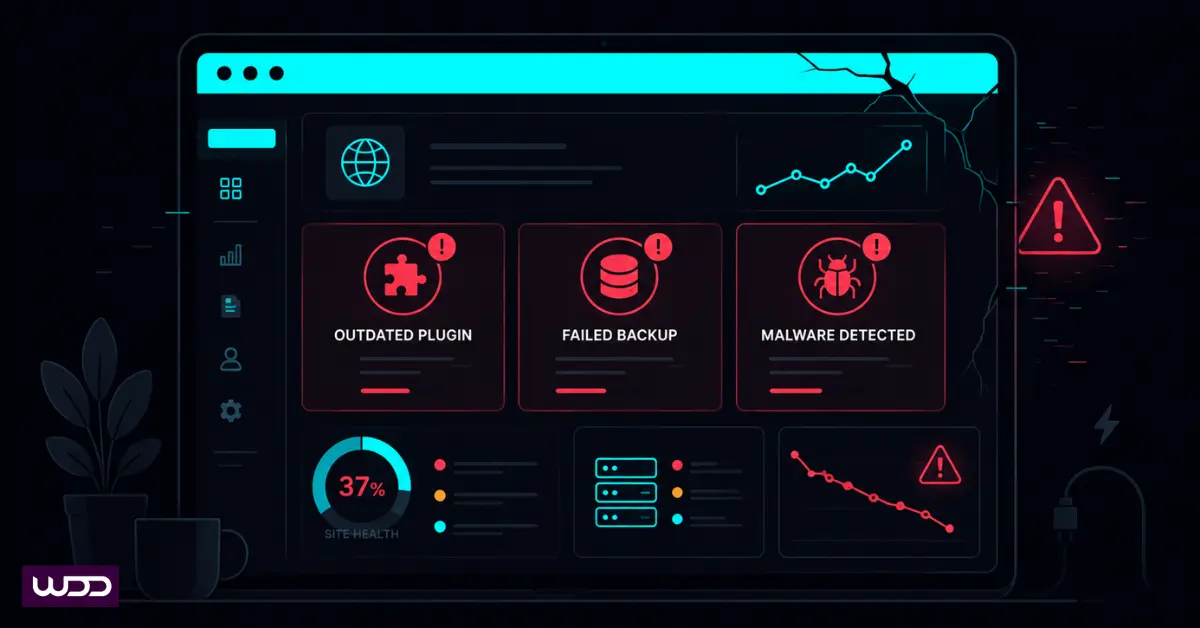
What happens if you skip maintenance?
Nothing, at first, and that is the trap. Outdated plugins quietly accumulate known vulnerabilities, backups silently stop running, and page speed degrades as the database bloats. Then one day the site is hacked, blacklisted by Google, or simply down, and the recovery bill arrives all at once.
Search visibility decays the same slow way. Broken links, crawl errors and slow Core Web Vitals push you down both Google rankings and AI search answers, and by the time traffic drops enough to notice, months of ground have been lost. The neglect is invisible right up to the moment it is expensive. On the security side alone, the official WordPress hardening guidance is clear that keeping core, themes and plugins current is the baseline defence, which is exactly the routine a plan automates.
There is a due-diligence angle too. A preventable, neglected flaw is not just bad luck; under PDPA it can read as a failure to take reasonable care of the personal data your site holds. Documented, ongoing maintenance is part of demonstrating that you did.
'%2F%3E%3Cstop%20offset%3D'1'%20stop-color%3D'rgba(212%2C175%2C55%2C0)'%2F%3E%3C%2FradialGradient%3E%3Cpattern%20id%3D'hex'%20width%3D'56'%20height%3D'48'%20patternUnits%3D'userSpaceOnUse'%3E%3Cpath%20d%3D'M14%200l14%208v16l-14%208-14-8V8z%20M42%200l14%208v16l-14%208-14-8V8z%20M28%2024l14%208v16l-14%208-14-8V32z'%20fill%3D'none'%20stroke%3D'rgba(4%2C245%2C255%2C0.14)'%20stroke-width%3D'1.1'%2F%3E%3C%2Fpattern%3E%3C%2Fdefs%3E%3Crect%20width%3D'1200'%20height%3D'628'%20fill%3D'url(%23g)'%2F%3E%3Crect%20width%3D'1200'%20height%3D'628'%20fill%3D'url(%23hex)'%2F%3E%3Crect%20width%3D'1200'%20height%3D'628'%20fill%3D'url(%23gold)'%2F%3E%3Cg%20stroke%3D'rgba(4%2C245%2C255%2C0.62)'%20stroke-width%3D'5'%20fill%3D'none'%3E%3Crect%20x%3D'830'%20y%3D'150'%20width%3D'230'%20height%3D'250'%20rx%3D'14'%20stroke%3D'%23d4af37'%2F%3E%3Cpath%20d%3D'M862%20200l16%2016%2028-30'%20stroke-linecap%3D'round'%20stroke-linejoin%3D'round'%2F%3E%3Cline%20x1%3D'926'%20y1%3D'204'%20x2%3D'1030'%20y2%3D'204'%20stroke%3D'rgba(255%2C255%2C255%2C0.4)'%2F%3E%3Cpath%20d%3D'M862%20264l16%2016%2028-30'%20stroke-linecap%3D'round'%20stroke-linejoin%3D'round'%2F%3E%3Cline%20x1%3D'926'%20y1%3D'268'%20x2%3D'1030'%20y2%3D'268'%20stroke%3D'rgba(255%2C255%2C255%2C0.4)'%2F%3E%3Cpath%20d%3D'M862%20328l16%2016%2028-30'%20stroke-linecap%3D'round'%20stroke-linejoin%3D'round'%20stroke%3D'rgba(255%2C255%2C255%2C0.35)'%2F%3E%3Cline%20x1%3D'926'%20y1%3D'332'%20x2%3D'1030'%20y2%3D'332'%20stroke%3D'rgba(255%2C255%2C255%2C0.25)'%2F%3E%3C%2Fg%3E%3Crect%20x%3D'90'%20y%3D'300'%20width%3D'76'%20height%3D'7'%20rx%3D'3.5'%20fill%3D'%23d4af37'%2F%3E%3Ctext%20x%3D'88'%20y%3D'372'%20font-family%3D'Arial'%20font-size%3D'54'%20fill%3D'%23ffffff'%20font-weight%3D'700'%3EThe%20Five-Point%20Check%3C%2Ftext%3E%3Ctext%20x%3D'90'%20y%3D'420'%20font-family%3D'Arial'%20font-size%3D'24'%20fill%3D'rgba(255%2C255%2C255%2C0.8)'%3EHow%20to%20judge%20any%20maintenance%20quote%3C%2Ftext%3E%3C%2Fsvg%3E)
How to choose the right maintenance plan
Run any quote through this five-point check. Tick each promise the provider actually makes. If a provider passes all five, the price is probably fair. If they dodge any of them, walk. The checklist below is the full test in plain text; the tick boxes just keep your score.
Ready to price your own site?
See the current tiers, hours and inclusions, scoped to your site's size and needs.
Cornerstone guide The Cost Of NeglectThe warning signs your site is overdue, and what skipping maintenance really costs.
No lock-in Request A QuotationSend us your actual scope and we will tell you honestly which tier it needs.
Whichever tier fits, the honest answer is the same one we started with: buy the coverage, not the label. Compare the live plans on our website maintenance services Malaysia page, or request a quotation with your real requirement and we will tell you which tier it actually needs, even when that is the cheaper one.
Frequently asked questions
Website maintenance plans in Malaysia cost RM450 to RM3,200 per month from an agency, depending on site complexity and included support hours. Our own tiers run from VLite at RM450 a month with 30 hours a year up to Enterprise at RM3,200 a month with 240 hours. Freelancers charge less but rarely offer monitoring, reporting or a response-time commitment.
A complete website maintenance plan includes software updates, daily off-site backups, round-the-clock uptime monitoring, security scans, database optimisation, SEO and accessibility checks, compatibility testing, and monthly reports, plus a set number of support hours per year. If a quote is missing more than two of these, it is a cheaper product than a full plan.
Most small business sites are well served by an entry-level plan of around 30 hours a year, which is our VLite tier. Sites with frequent content changes or eCommerce need 60 to 120 hours, and enterprise sites with staging and compliance needs use up to 240. A provider should tell you the exact annual hours before you sign.
Yes, if the website generates leads or sales. A single emergency malware cleanup plus lost sales during downtime usually costs more than a year of an entry-level plan at RM450 a month. If your site is a brochure you rarely change, one-time fixes may be enough instead.
You can apply updates and run backups yourself, and for a hobby site that is fine. Most business owners stop within a few months, and gaps in security, monitoring and off-site backups appear quickly. DIY suits sites that are not business-critical; anything earning leads or sales is safer on a plan.
Hosting is the server your website lives on. Maintenance is the ongoing work that keeps the website itself updated, secure, fast and backed up. You need both, and they are billed separately. A hosting plan alone does not patch your plugins or restore your site after a hack.
'%2F%3E%3Ccircle%20cx%3D'72'%20cy%3D'58'%20r%3D'26'%20fill%3D'rgba(4%2C245%2C255%2C0.5)'%2F%3E%3Cpath%20d%3D'M28%20128c0-26%2020-40%2044-40s44%2014%2044%2040z'%20fill%3D'rgba(4%2C245%2C255%2C0.5)'%2F%3E%3C%2Fsvg%3E)